Skip to Content

Blog

CERTIFICATION: “Good Distribution Practices” for Pharmaceutical Products.

CERTIFICATION: “Good Distribution Practices” for Pharmaceutical Products.

The supply chain in the pharmaceutic industry requires rigorous monitoring under strictly controlled conditions for the delivery and distribution ensuring the correct handling of this kind of products. These controls are measured under quality rules and standards which certificate the good distribution practices guaranteeing the commitment of organizations and companies offering  transport and distribution services. That is why it is important companies within the logistics, transport or cargo sector to be endorsed by these kind of certifications proving the right training, risk assessments or security systems to carry out distribution services according to current norms and regulations.

The expertise and commitment of companies such as the Smart Logistics Group has allowed them to receive the GDP (Good Distribution Practices) certification that guarantee the correct handle and distribution of pharmaceutical products for the international maritime transit. The Smart Logistics Group once again demonstrates that is more than prepared to transport any kind of products, including pharmaceutical with the highest international quality and security standards. This gives Smart a privileged position compared to the competition making them stand as a leader on the logistics and cargo sector for its professionalism and preparation.
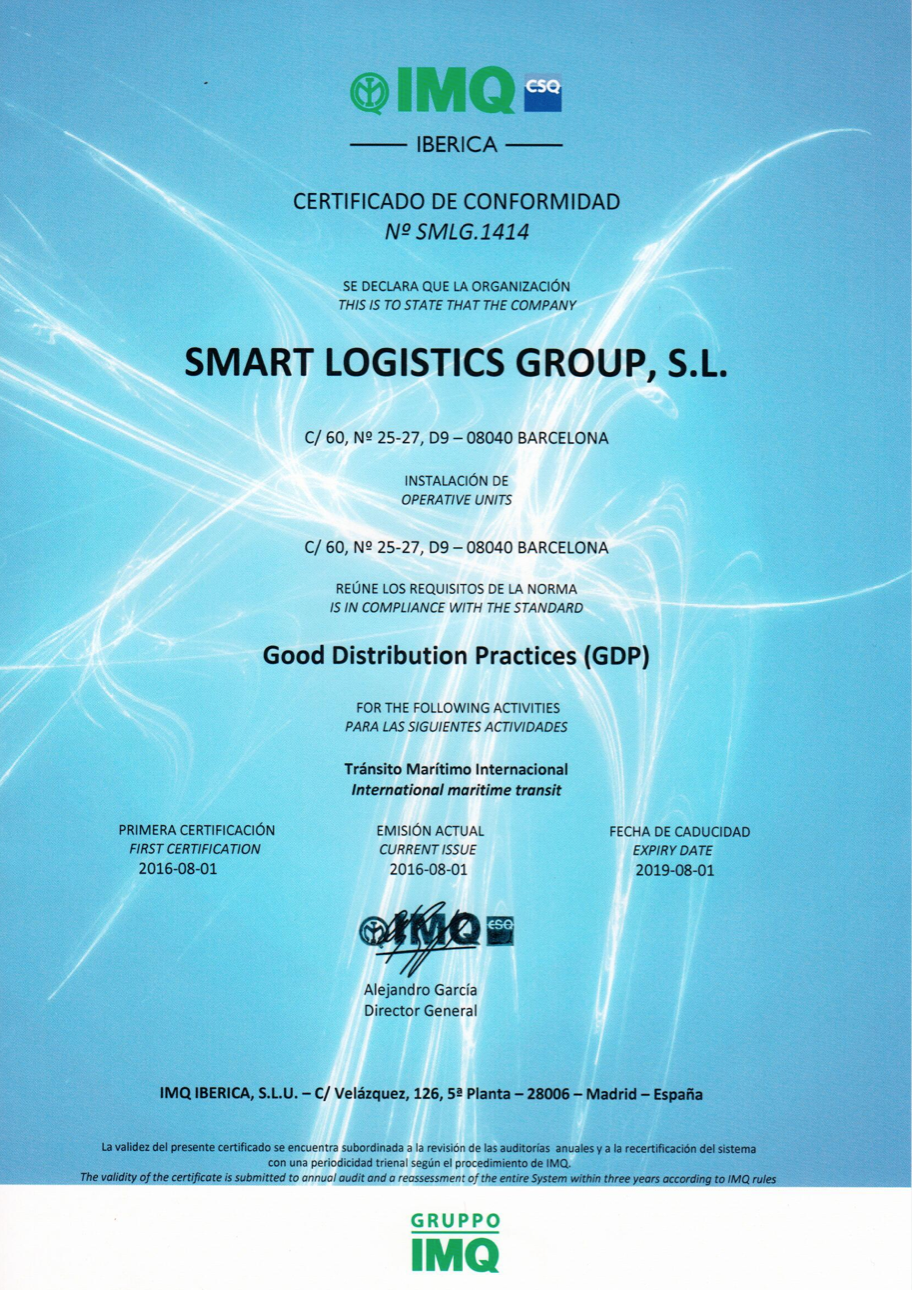
certificacion-good-distribution-practices
0 2 Continue Reading →

IMPORTANT NOTICE: New Weight Verification Requirement

The SOLAS Container Weight Verification Requirement becoming effective on July 1

In order to accomplish the SOLAS Container Weight Verification Requirement (Safety of Life at Sea Convention), we would like to inform our clients that from the 1st of July 2016 it will be mandatory the verification of the gross mass of loaded  containers before they are shipped. The SOLAS requirement for weighing containers is an international regulation thus any container with no Verified Gross Mass (VGM) information will not be loaded.

NO VGM = NO LOAD

The shipper is responsible for the proper weight verification of every loaded container. This VGM information then has to be provided to the shipping line with enough time to allow the right procedures for the ship loading plan.

*Shipper means a legal entity or person named on the Bill of Lading or Sea Waybill or equivalent multimodal transport document (e.g. “through” bill of lading, Sea waybill) as shipper and/or who (or in whose name or on whose behalf) a contract of carriage has been concluded with a shipping company.

The SOLAS convention notes the following two methods that can be done before or after receiving the load at the port terminal:

  1. By weight (Maritime terminal or a third party): Once the container is completely loaded, it has to be weighed on its own or along with the truck transporting it, in which case the tare, trailer and fuel weight would be subtracted.
  2. By calculation (Shipper): Weighing all packages and cargo items including the mass of pallets, dunnage and other securing material and adding the tare mass of the container. This requires an approved certified method (a calibrated scale) according to the ISO 9001 standard or its equivalent which includes control procedures to meet national certification and calibration requirements.

We as Smart Logistics, can provide a weighing service in case shippers do not have access to a proper calibrated scale meeting the requirements of weight verification method 2. This weighing service will take place within maritime terminals or with a port community agent. The fees will vary depending on the port of departure and maritime terminals. In this case a weighing certificate would be sent to the shipper who will need to keep it until the shipment has arrived to its final destination.

Please feel free to contact us for any further details.

0 2 Continue Reading →

Concrete recycling, sustainability from Spain to Mexico

Concrete recycling, sustainability from Spain to Mexico 

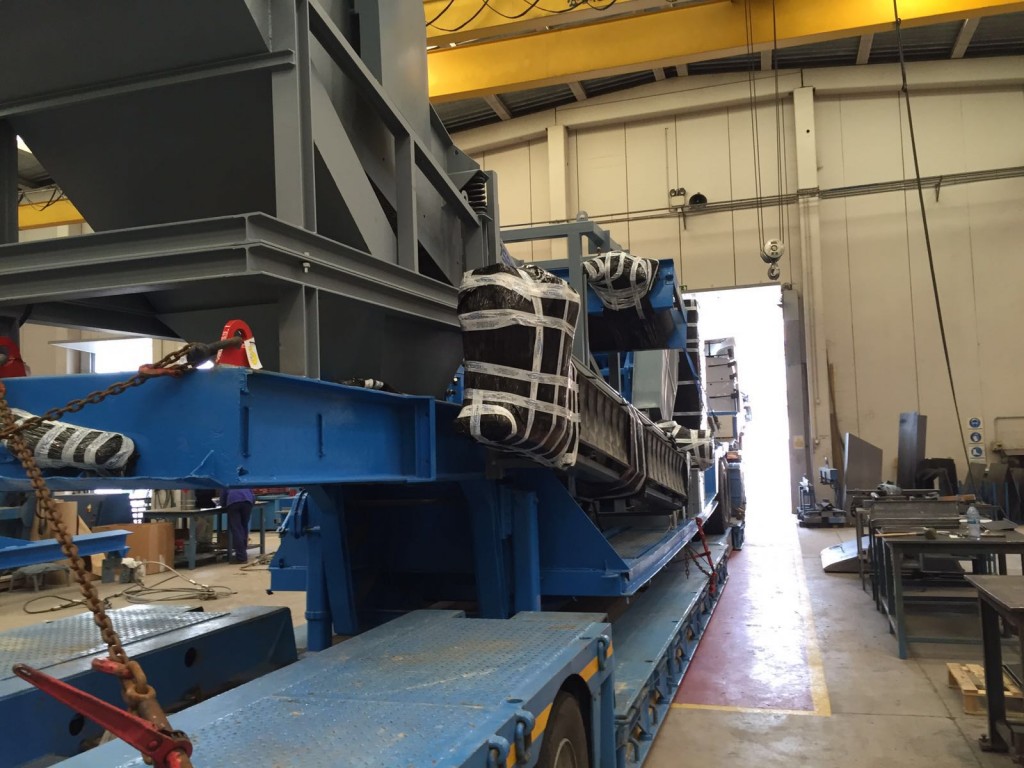
Concrete recycling is a sustainable process that promotes the reuse of concrete remains as aggregates for the production of new concrete or other construction materials. This project cargo consisted in a crushing machine that allows the recycling process of concrete. The Smart Logistics group settled the shipment transportation from the Port of Sagunto in Valencia, Spain to the Port of Veracruz in Mexico. The shipment was 27 tons of total weight and had the following measures: 2,66 x 4,05 x 12,85 mts (width, heigh and length).

0 2 Continue Reading →

The special shipment of three truck heads to the Emirates

The special shipment of three truck heads to the Emirates

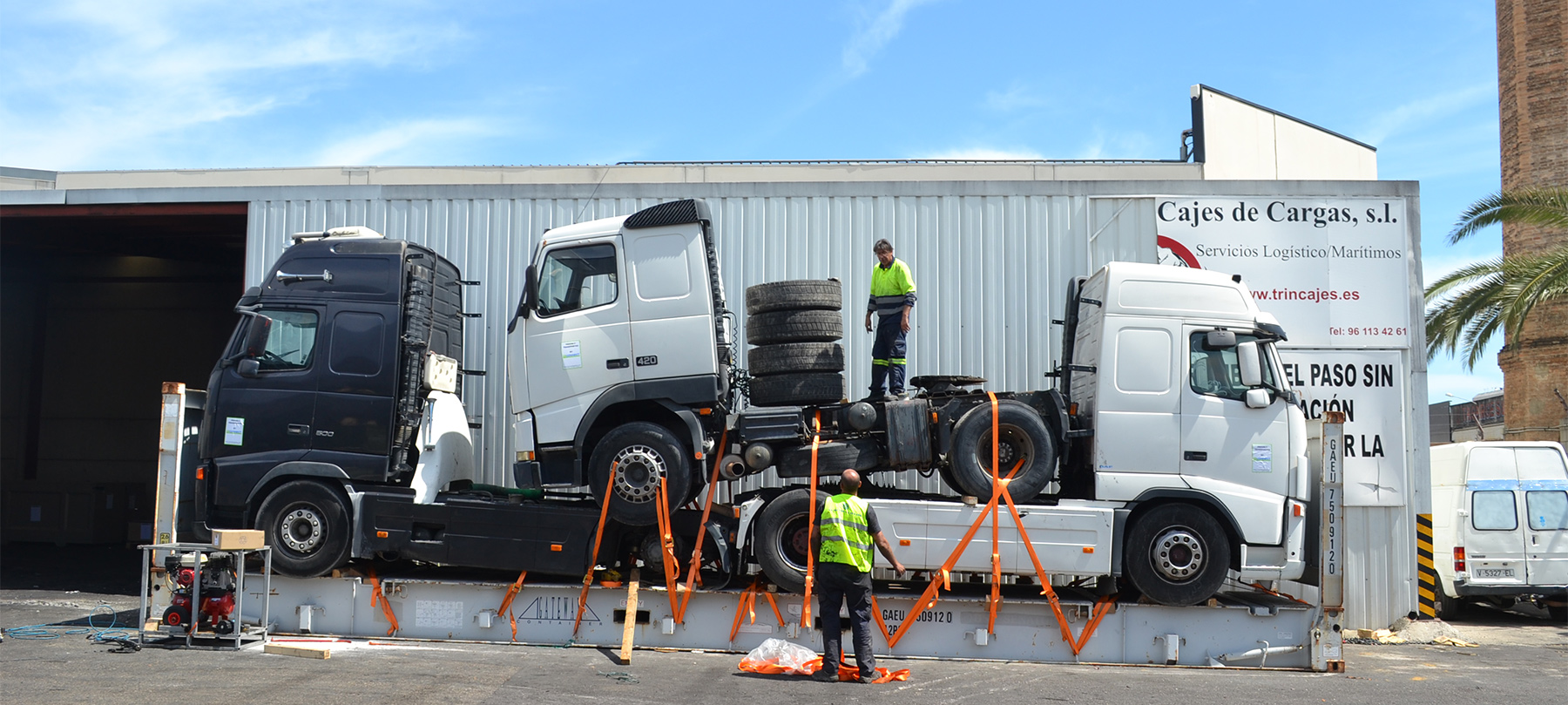
Recently the Smart Logistics Group was asked to ship 3 truck heads within a flat rack collapsible 40ft container from Portugal to United Arab Emirates. It required a high precision loading due to the size of the shipment, where two of the truck heads were mounted opposite to each other and the third on top of these two. It was necessary to carefully disassemble some parts of these trucks such as the rear wheels to meet the inland haulage and the maritime transport requirements for another successful shipment. As project managers and expert consultants, the Smart Logistics Group team handled logistics planning at all stages of the project cycle, developing route plans, risk contingency plans, cost assessment and survey services, key points to most of this type of projects.

Want to know more about this and other logistic solutions?

0 3 Continue Reading →

Heavy load successfully shipped from Spain to Bangladesh

Heavy load successfully shipped from Spain to Bangladesh

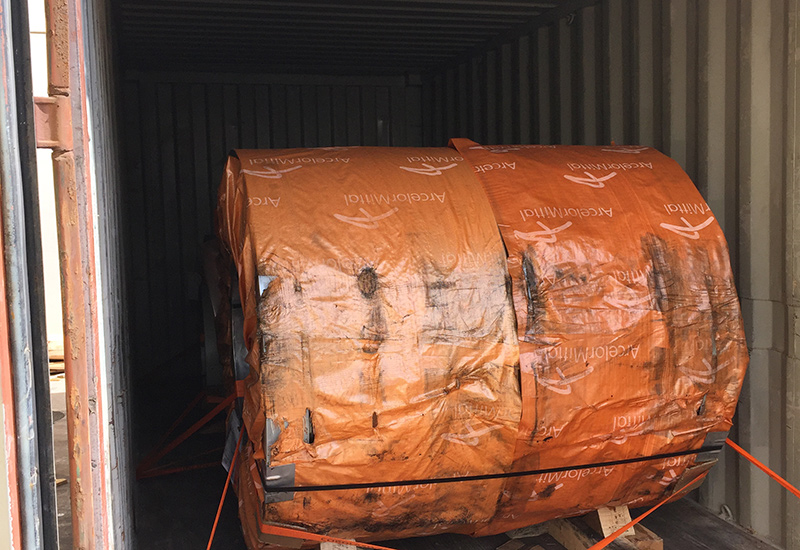
On may 2016, we worked on a project cargo for Arbour Shipping which consisted in a shipment of flat-rolled products of iron or non-alloy steel from the Port of Valencia in Spain to the Port of Chittagong, the most important seaport in Bangladesh. There were 40 iron (non-alloy) coils placed in 13×20’DV containers with a gross weight of almost 270 tons.

The shipping started in Sagunto, a town close to Valencia in Spain, where it was transported by road to Trincajes de Carga Warehousing where the shipment was placed and settled in the 13 containers and then transported to the Port of Valencia to its final destination in Chittagong. The shipping was done successfully under the EXW terms for the spanish shipper ArcelorMittal.

0 2 Continue Reading →